


Nitinol wire is one of the most unique engineering materials available today. Thanks to its shape memory effect and superelastic properties, engineers use Nitinol wire in medical devices, robotics, aerospace systems, industrial equipment, and many custom applications.
A common question from customers is:
How do you shape Nitinol wire into a permanent form?
The answer lies in a process called shape setting. During shape setting, the wire is fixed in a fixture and heated at a controlled temperature. After heat treatment, the material remembers the programmed shape and can return to that shape after deformation.
What Is Shape Setting?
Shape setting is the process of programming a specific shape into Nitinol wire.
Unlike stainless steel or titanium wire, Nitinol can remember a predefined geometry. After proper heat treatment, the wire can repeatedly return to its trained shape.
Step 1: Select the Proper Nitinol Wire
The first step is choosing the correct material.
| Selection Factor | Description |
|---|---|
| Wire Diameter | Affects flexibility and forming capability. |
| Transformation Temperature (Af) | Determines shape memory activation temperature. |
| Material Grade | Choose superelastic or shape memory Nitinol. |
| Surface Finish | Bright, oxide, etched, polished, or custom finish. |
| Mechanical Properties | Must match the intended application. |
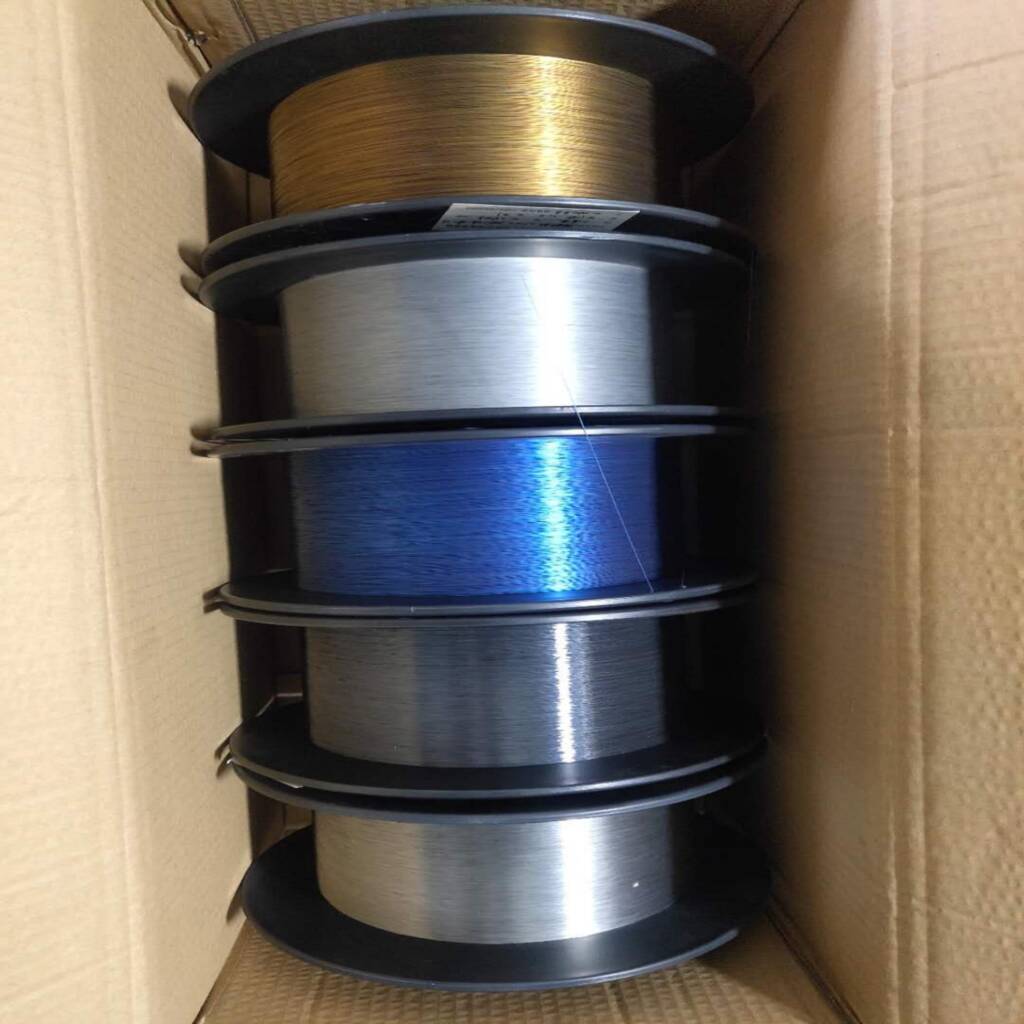
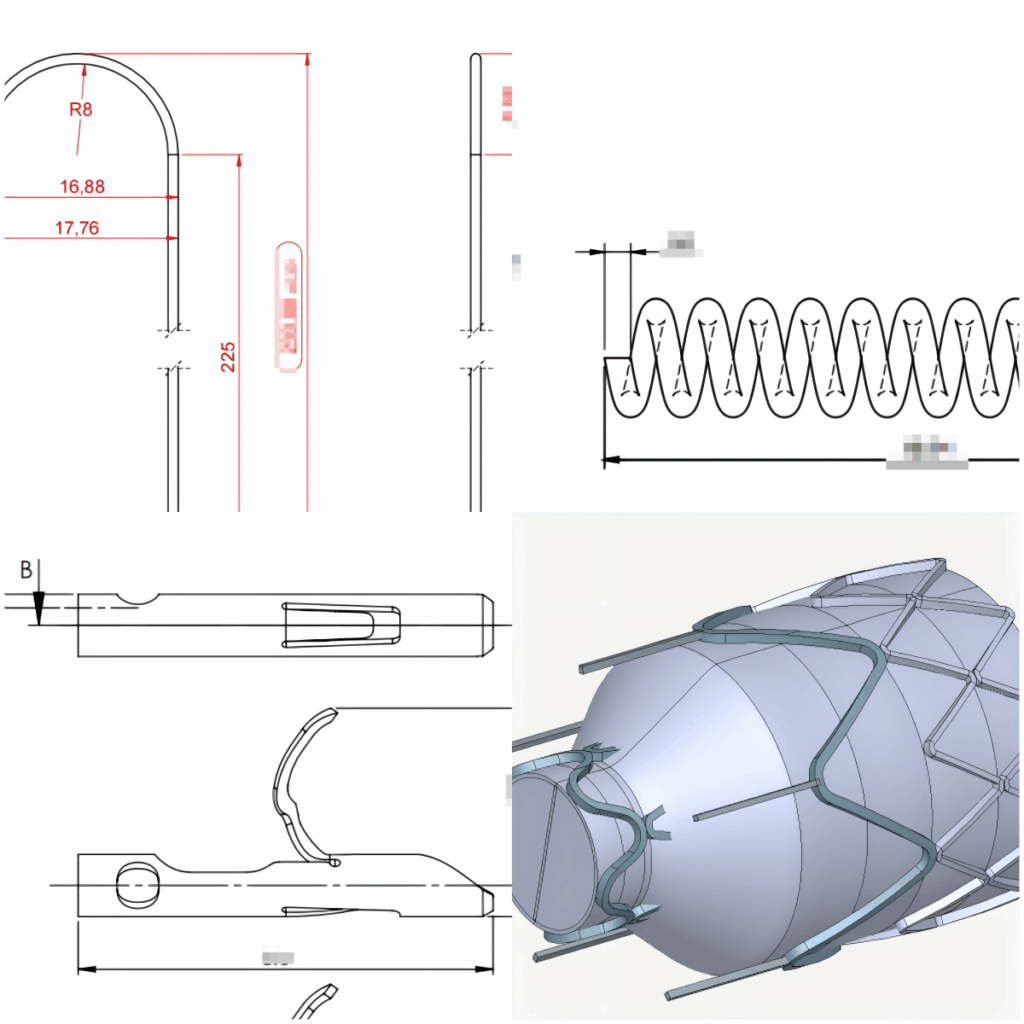
Step 2: Design the Target Shape
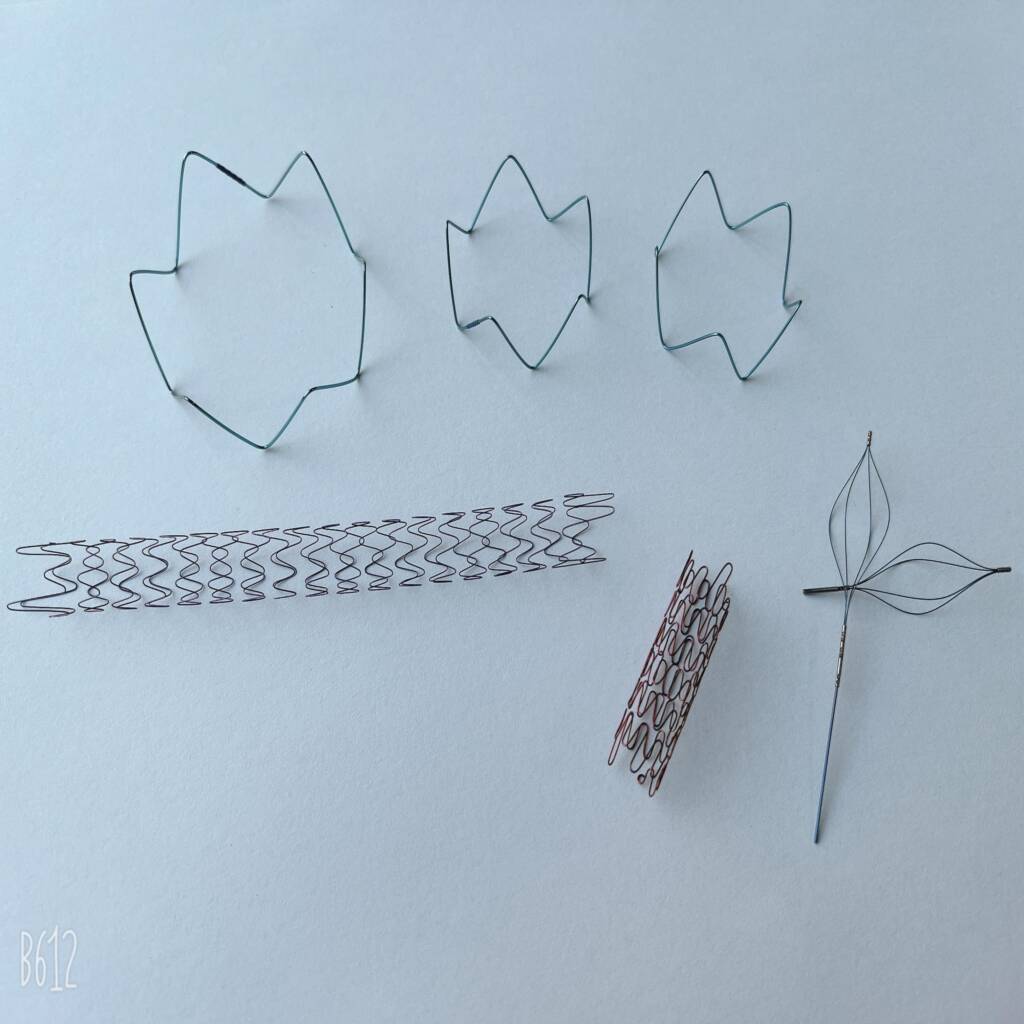
Before manufacturing begins, engineers define the final geometry. The design may include loops, springs, baskets, frames, or complex three-dimensional structures.
Step 3: Prepare the Shape-Setting Fixture
The fixture is one of the most important tools in the process. The Nitinol wire must remain fixed during heating to ensure dimensional accuracy.
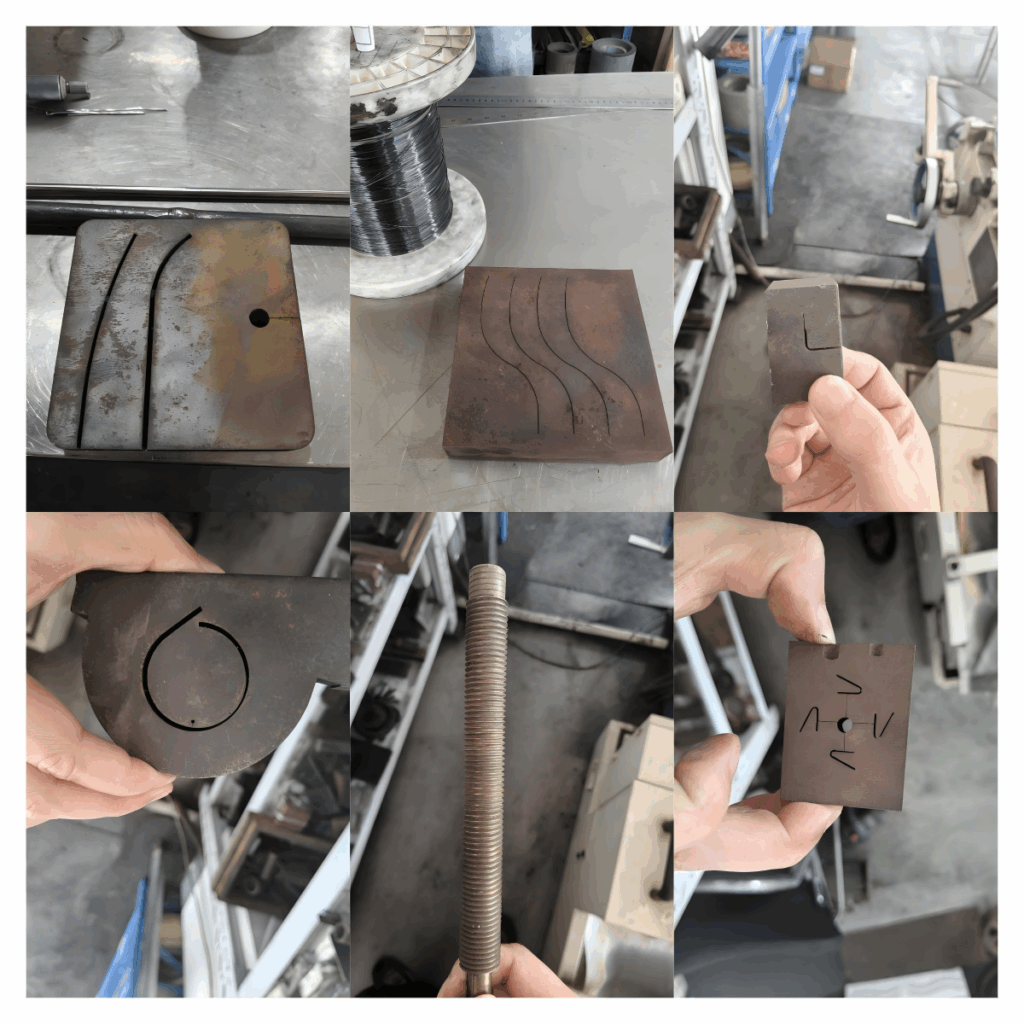
Step 4: Form the Wire
Technicians place the wire onto the fixture according to the design requirements. Depending on the product, this may involve winding, bending, wrapping, clamping, or multi-point forming.
Step 5: Heat Treat the Nitinol Wire
Heat treatment creates the permanent shape memory.
| Parameter | Typical Range |
|---|---|
| Shape Setting Temperature | 450°C – 550°C |
| Holding Time | 3 – 15 Minutes |
| Cooling Method | Air Cooling or Water Quenching |
| Key Influencing Factors | Wire Diameter, Alloy Composition, Final Application |
Higher temperatures may improve shape retention but can also affect mechanical properties if not carefully controlled.
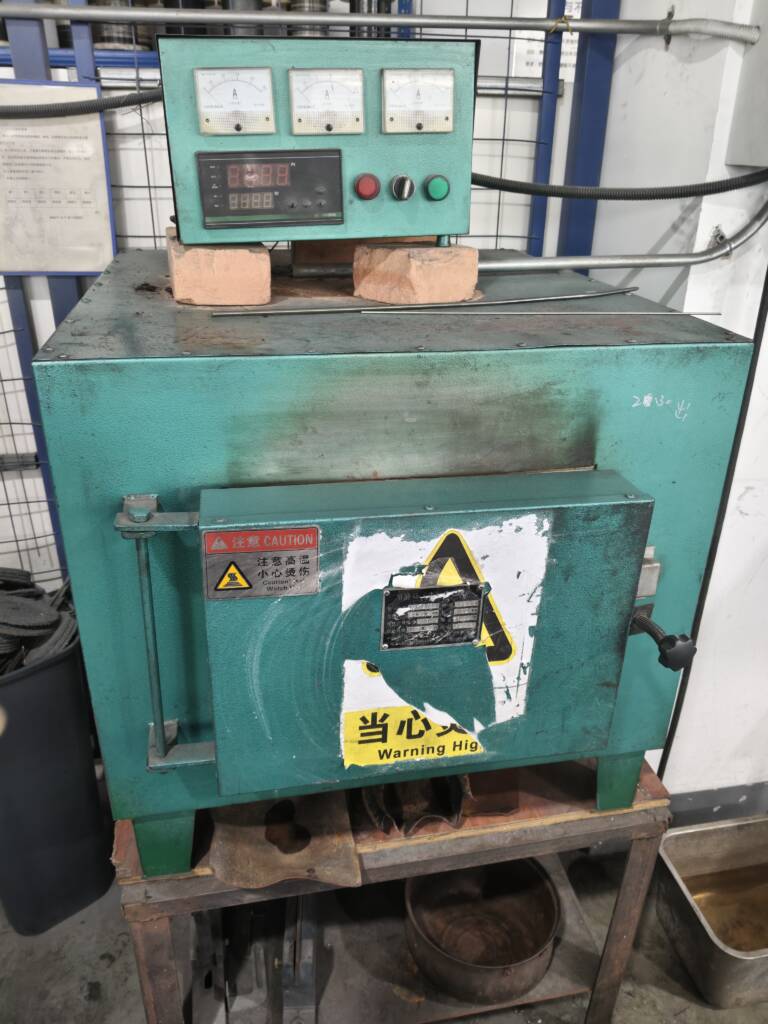
Step 6: Cooling After Heat Treatment
After heating, the fixture is removed from the furnace and cooled. Manufacturers commonly use air cooling or water quenching depending on the application requirements.
Step 7: Remove the Fixture and Verify Shape Recovery
After cooling, technicians remove the wire from the fixture and verify shape memory performance through testing and inspection.
Common Problems During Nitinol Shape Setting
| Problem | Possible Cause | Recommended Solution |
|---|---|---|
| Shape Does Not Hold | Low temperature or short holding time | Increase temperature or optimize heat cycle |
| Excessive Oxidation | Poor atmosphere control | Use vacuum furnace or protective atmosphere |
| Inconsistent Shape | Fixture movement | Improve fixture stability |
| Reduced Mechanical Performance | Overheating | Optimize heat treatment parameters |
Shape Memory Nitinol vs Superelastic Nitinol
| Property | Shape Memory Nitinol | Superelastic Nitinol |
|---|---|---|
| Activation Method | Temperature Change | Mechanical Loading |
| Main Function | Returns to shape when heated | Recovers large strain instantly |
| Typical Applications | Actuators, Thermal Devices | Guidewires, Stents, Medical Devices |
| Shape Setting Required | Yes | Yes |
Applications of Shaped Nitinol Wire
| Industry | Typical Applications |
|---|---|
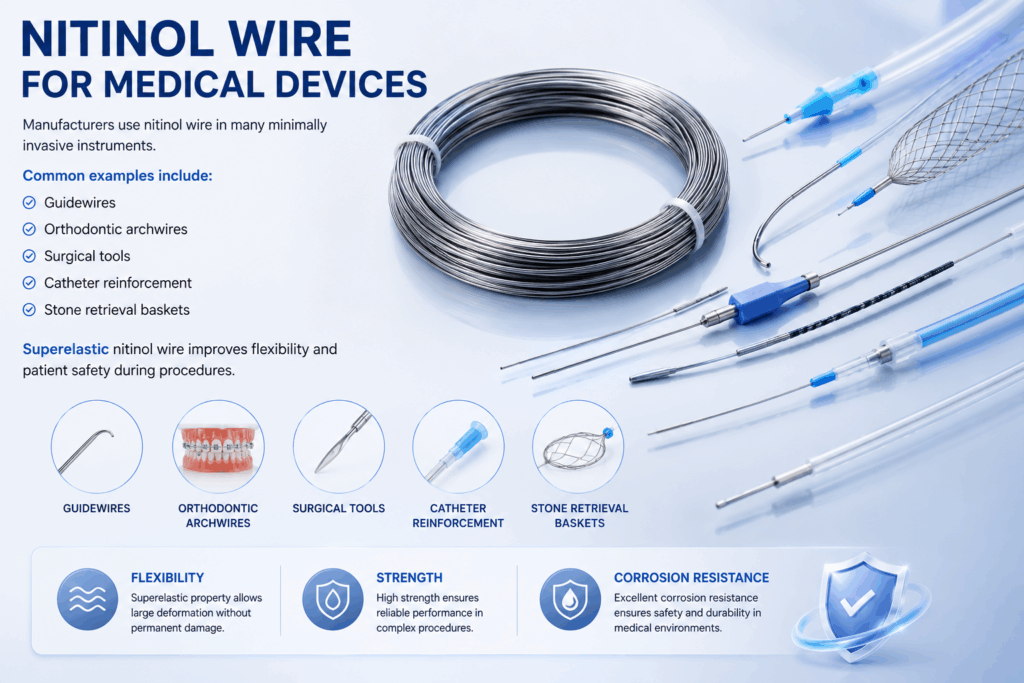
| Medical Devices | Guidewires, Catheters, Stone Baskets, Surgical Instruments |
| Robotics | Flexible Actuators, Motion Systems |
| Aerospace | Deployable Structures, Lightweight Mechanisms |
| Industrial Equipment | Precision Springs, Smart Mechanisms |
Frequently Asked Questions
What temperature is used to shape Nitinol wire?
Most shape-setting processes use temperatures between 450°C and 550°C.
Can Nitinol be bent permanently?
Yes. Manufacturers can program a permanent shape through fixture-based heat treatment.
Does shape setting affect superelasticity?
Yes. Heat-treatment parameters influence transformation temperatures and mechanical behavior.
How long does shape setting take?
Typical holding times range from 3 to 15 minutes.
What fixtures are used for Nitinol shape setting?
Manufacturers commonly use stainless steel, tool steel, ceramic, or high-temperature alloy fixtures.
Conclusion
Successful Nitinol wire shaping depends on proper fixture design, controlled heat treatment, and consistent manufacturing parameters.
With the correct process, Nitinol wire can be transformed into highly precise components that deliver reliable shape memory and superelastic performance.
Learn More:
Medium

